Frequently Asked Questions – GCC e-Invoicing
What is GCC e-Invoicing?
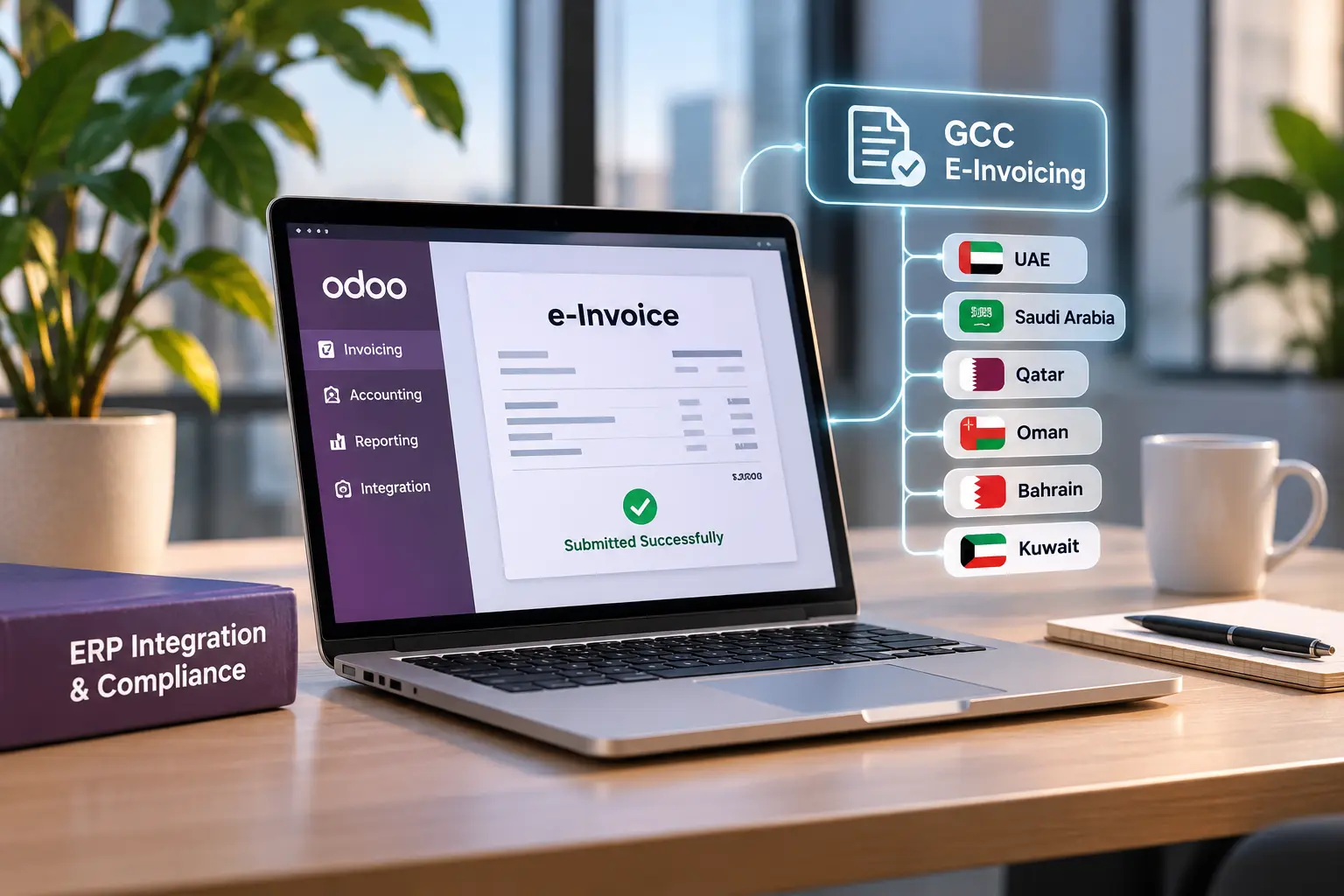
GCC e-Invoicing refers to electronic invoicing programmes introduced by individual Gulf countries to support structured invoice exchange and digital tax administration.
Is e-Invoicing mandatory in all GCC countries?
No. Each country has its own implementation status and regulatory requirements. Saudi Arabia has an operational phased system, while the UAE and Oman are implementing their respective frameworks. Other countries are at different stages of development.
Do all GCC countries use the same e-Invoicing system?
No. Their systems differ:
- UAE: Peppol-based ASP framework.
- Saudi Arabia: ZATCA FATOORA.
- Oman: Fawtara.
- Qatar, Bahrain and Kuwait: Follow their respective regulatory developments.
What is an Accredited Service Provider (ASP)?
An ASP is a provider accredited by the UAE Ministry of Finance to deliver services under the UAE electronic invoicing framework. Other GCC countries may use different provider terminology and approval processes.
What is Peppol?
Peppol is an international network and technical framework that enables organisations to exchange structured electronic documents. It forms part of the UAE's e-Invoicing framework.
Can Odoo ERP be integrated with GCC e-Invoicing systems?
Odoo can be assessed for integration with suitable country-specific e-Invoicing solutions. The implementation approach depends on the country's specifications, Odoo version, configuration and service-provider capabilities.
Do businesses need to replace their existing ERP?
Not necessarily. Existing ERP and accounting platforms may be integrated with appropriate electronic invoicing solutions if they meet the relevant technical requirements.
Can one integration support every GCC country?
Not automatically. Each country has its own invoice specifications, technical requirements and provider arrangements. Multi-country businesses may require separate configurations and integrations.